
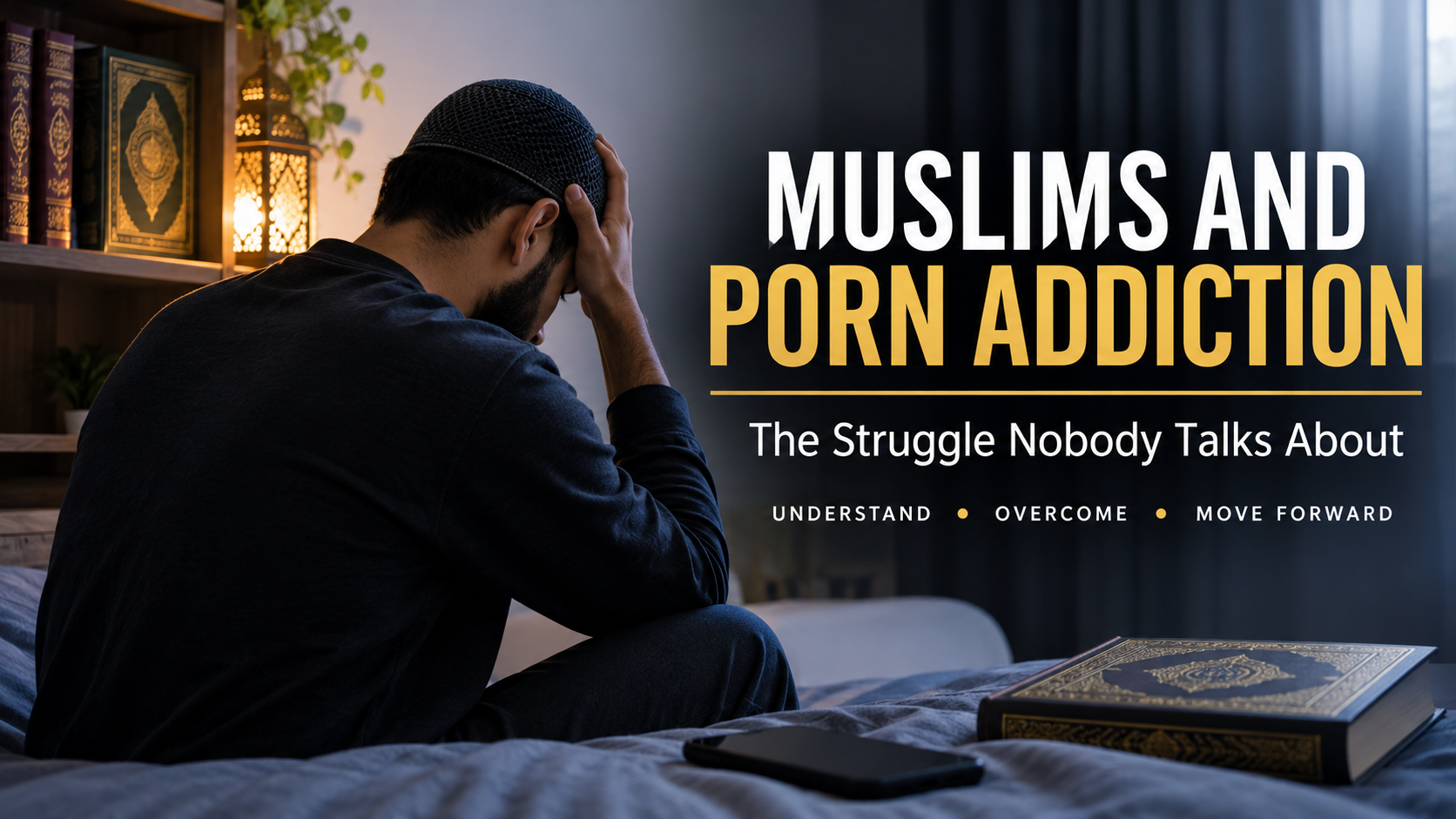
Pornography is a subject that many Muslims don't feel comfortable talking about. It's often kept behind closed doors, and for many Muslim men, it's a struggle they deal with privately.
You might be someone who prays five times a day, tries to practise Islam, makes du'a regularly and genuinely wants to stay away from pornography. Yet, despite your best intentions, you keep finding yourself going back to it.
You tell yourself this is the last time. You promise yourself that things will be different. You might even go several days or weeks without watching pornography, only to find yourself falling into the same pattern again.
Then comes the guilt, disappointment and frustration.
You start questioning yourself. Why do I keep doing this? Why can't I just stop? What's wrong with me?
These are questions many Muslim men struggle with, but rarely feel comfortable discussing.
I believe this is a conversation we need to have more openly within our communities.
Not to normalise pornography, but to help people understand the problem, recognise what's happening and, most importantly, know that there are ways to move forward.
Why Do Muslims Struggle With Pornography?
One thing I want to highlight is that pornography struggles are not always as simple as people make them out to be.
It's easy to tell someone to stop watching pornography, lower their gaze and have stronger willpower. But what happens when someone already knows all of that and still finds themselves returning to the behaviour?
There is often more going on beneath the surface.
For some people, pornography becomes a way of dealing with certain emotions or situations.
Think about someone who has had a stressful day. They might feel lonely, anxious, bored or overwhelmed. They pick up their phone, start scrolling and eventually find themselves watching pornography.
For a short period, it provides an escape. But afterwards, the same feelings are still there, sometimes accompanied by guilt and regret.
Over time, this behaviour can become a pattern.
Some common factors include:
- Loneliness and isolation.
- Stress and anxiety.
- Boredom and having too much unstructured time.
- Difficult emotions and personal struggles.
- Spending long periods alone.
- Unhealthy phone and internet habits.
This is why understanding the reasons behind your behaviour is so important.
If you don't understand what leads you towards pornography, how can you expect to make lasting changes?
Understanding Your Triggers
Something I often emphasise when discussing recovery is the importance of understanding your triggers.
Pornography use doesn't always happen randomly. There are often certain situations, environments or patterns that make someone more vulnerable.
For example:
- Taking your phone to bed at night.
- Staying awake until the early hours.
- Scrolling through Instagram or TikTok and coming across sexual content.
- Spending time alone in your bedroom.
- Having no structure or plans during the day.
You might notice that most of your struggles happen at a particular time.
Perhaps it's late at night when everyone else is asleep. Perhaps it's when you're feeling bored or when you've had a difficult day.
The important thing is to start recognising these patterns.
I would encourage anyone struggling with pornography to start keeping track of when their urges happen, what they were doing beforehand and how they were feeling.
You might begin noticing patterns that you hadn't previously recognised.
And once you understand your triggers, you can start putting strategies in place to manage them.
The Islamic Perspective: Don't Lose Hope in Allah's Mercy
As Muslims, we know that pornography is haram. We understand the importance of lowering our gaze and protecting our chastity.
Allah says in Surah An-Nur (24:30):
"Tell the believing men to lower their gaze and guard their chastity. That is purer for them. Surely Allah is All-Aware of what they do."
This is a reminder of our responsibility as Muslim men.
However, there is something else I think is equally important to remember.
We must never lose hope in Allah's mercy.
Allah says in Surah Az-Zumar (39:53):
"Do not lose hope in Allah's mercy, for Allah certainly forgives all sins. He is indeed the All-Forgiving, Most Merciful."
Sometimes, when someone repeatedly falls into the same behaviour, they begin to feel hopeless.
They might think they've asked Allah for forgiveness so many times that there is no point anymore. They become frustrated with themselves and start feeling distant from their deen.
But this is not the attitude we should adopt.
We should take our actions seriously, make sincere tawbah and continue striving to improve.
Struggling with a sin does not mean you should give up on your relationship with Allah.
Never allow your mistakes to convince you that you cannot change.
Why Simply Relying on Willpower Doesn't Always Work
Let's be honest. How many times have you told yourself that you're going to stop watching pornography?
Perhaps you've deleted social media applications, installed website blockers, made promises to yourself or decided that you're never going to do it again.
Yet, somehow, you find yourself back in the same situation.
Why?
Because making a promise to stop doesn't necessarily change the habits, routines and situations that lead you towards pornography.
Imagine someone who regularly watches pornography in bed at 1am.
They decide they're going to stop, but they continue taking their phone into their bedroom, scrolling through social media and staying awake until the early hours.
Nothing about their environment has changed.
Eventually, the same triggers appear.
This is why I believe recovery needs to involve more than willpower.
You need to understand your behaviour, make changes to your environment and develop practical strategies that you can actually follow.
For example:
- Keep your phone outside your bedroom at night.
- Establish a consistent sleeping routine.
- Reduce exposure to triggering content on social media.
- Identify situations where you're most vulnerable.
- Have a plan for managing urges.
- Introduce healthier activities into your daily routine.
- Build accountability into your recovery.
These might seem like small changes, but they can make a real difference over time.
What Can You Do When You Experience an Urge?
One of the biggest mistakes people make is waiting until they experience an urge before deciding what they're going to do about it.
By that point, they're already in a situation where they might find it difficult to think clearly.
My advice would be to have a plan ready beforehand.
For example, if you regularly struggle with urges when you're alone in your bedroom, don't just sit there trying to fight the urge.
Get up. Leave the room. Put your phone down.
You could:
Go for a walk. Cold shower Make wudu. Pray if appropriate. Contact someone you trust. Find something productive to occupy your time.
The aim is to interrupt the pattern rather than remain in the same environment.
It's also important to understand that experiencing an urge doesn't mean you have to act on it.
An urge can pass without you giving in to it.
Learning how to respond differently is an important part of recovery.
What About When You Relapse?
Let's talk about something that many people experience but don't necessarily know how to deal with: relapse.
You might have gone two weeks, a month or even several months without pornography.
Then one day, you slip up.
Immediately, you feel disappointed. You start questioning all the progress you've made and might even convince yourself that you've gone back to square one.
But I want you to look at it differently.
A relapse doesn't mean that all your previous progress has disappeared.
It does, however, give you an opportunity to look at what happened.
Ask yourself:
- What was I doing before the relapse?
- What triggered me?
- Was I feeling stressed, lonely or bored?
- Did I put myself in a situation where I was more vulnerable?
- What could I have done differently?
Don't just focus on the fact that you relapsed. Look at what led up to it.
The purpose is to learn from the experience, take responsibility and make adjustments.
Recovery isn't just about counting the number of days you've been free from pornography. It's also about changing the habits and behaviours that kept bringing you back to it.
You Don't Have to Deal With This Alone
One of the biggest challenges with pornography is that many Muslim men feel they have nobody they can speak to.
They're worried about being judged, embarrassed or exposed.
So they keep everything to themselves.
They make promises to stop, struggle privately and repeat the same cycle.
I believe we need to change how we approach this subject within Muslim communities.
We need more education, better support and conversations that allow people to seek help without feeling humiliated.
Having someone to speak to, whether that's a qualified therapist, a suitable support group or a recovery coach, can make a difference.
Seeking help doesn't mean you're weak. It means you're recognising that you need support and are willing to do something about it.
How Fitrah Revival Can Help
At Fitrah Revival, the approach is built around one important principle:
Recovery is about more than simply trying to stop. It's about understanding your behaviour and making meaningful changes.
I work with Muslim men who are struggling with pornography addiction and compulsive sexual behaviours.
Through our anonymous, one-to-one 12-week coaching programme, we focus on understanding individual triggers, recognising patterns and developing practical strategies for recovery.
This includes:
- Understanding what leads you towards pornography.
- Identifying triggers and high-risk situations.
- Developing an effective urge management strategy.
- Building healthier habits and routines.
- Introducing daily accountability and progress tracking.
- Applying Islamic values throughout the recovery journey.
My aim is to help Muslim men move away from the repeated cycle of pornography, guilt and broken promises, and towards a more structured and sustainable approach to recovery.
You don't have to keep going through this alone.
You can acknowledge where you are today while still working towards becoming a better version of yourself.
From Temptation to Freedom.
If you're struggling with pornography and would like to understand how we can support you, visit Fitrah Revival to learn more about our coaching programme.
Fitrah Revival provides recovery coaching and educational support. It is not a replacement for clinical assessment, psychotherapy or medical treatment where required.